





Lab-Grown Diamonds vs. Natural Diamonds: What’s the Difference?

Those in the market for a diamond today will find either a natural or a lab-grown diamond.
Neither option is simple. For example, if diamonds are grown in the lab, do they count as real? How can you spot them? Why does a lab-grown diamond cost less than a natural diamond? Are natural diamonds of better quality? What other considerations should you keep in mind when buying?
The simplest answer is this:
Both lab-grown and natural diamonds are diamonds. Their fundamental difference is how and where they formed.
Natural diamonds are formed through the Earth’s natural processes and lab-grown diamonds through technology in a contained environment. For the most part, they share similarities in chemical composition, crystal structure, and optical and physical properties.
So the real question isn't which is better. The question is which origin, characteristics, or price suits each person best.
The Difference in One Look

|
Origin |
Created in a controlled laboratory environment |
Formed naturally within the Earth |
|
Material |
Diamond |
Diamond |
|
Main growth methods |
HPHT or CVD |
Natural geological formation |
|
Appearance |
Can look indistinguishable from natural diamonds |
Natural diamond appearance |
|
Hardness |
10 on the Mohs scale |
10 on the Mohs scale |
|
Price |
Generally lower |
Generally higher |
|
Rarity |
Produced through technology |
Naturally finite |
|
Grading/reporting |
Available from recognised laboratories |
Available from recognised laboratories |
|
Meaning |
Modern, technology-created origin |
Natural geological origin |
The table has the details you need. The explanations that follow will help you better understand the differences.
Start With the Origin
Natural diamonds
Natural diamonds are made of carbon exposed to high temperatures and pressures at significant depths of the earth, and they take a long time to form.
They then reach the surface through natural processes and are recovered, cut, and polished.
Lab-grown diamonds
Lab-grown diamonds are made in a controlled environment using technology.
The two primary growth methods are:
HPHT — High Pressure High Temperature
This process uses high pressure and high temperature to simulate the conditions where diamonds grow.
CVD — Chemical Vapour Deposition
This process grows diamond material from a carbon-containing gas inside a closed chamber.
Both processes are proven methods for growing diamonds in a lab.
Although their processes are very different, the result is a diamond.
Are Lab-Grown Diamonds Real Diamonds?

Yes.
This is the most important misconception to address.
A lab-grown diamond is not the same thing as a diamond simulant.
GIA states that laboratory-grown diamonds have the same chemical composition, crystal structure, optical properties, and physical properties as natural diamonds.
Moissanite and cubic zirconia, for example, are different materials that resemble diamonds.
So the distinction is:
Natural diamond → diamond
Lab-grown diamond → diamond
Moissanite → diamond simulant
Cubic zirconia → diamond simulant
GIA states that lab-made diamonds should not be confused with simulants, even though they are alternatives to natural diamonds and may be presented as such.
Can You Tell Them Apart by Looking?

Not consistently.
A diamond, regardless of whether it is mined or lab grown, will still dazzle and sparkle.
GIA states that, without specific equipment, differentiating between lab-grown and natural diamonds can require gemological examinations.
This means you should avoid relying only on your eyes or a diamond tester.
A diamond report should provide you the confidence you need to know its origin.
What About Durability?
For everyday jewelry, both are extremely durable.
Diamonds, regardless of their origin, rank 10/10 on the Mohs scale of hardness.
The idea that a lab-grown diamond is less hard is a misconception.
While a diamond is extremely hard to scratch, the metal holding it can sustain damage from impact or wear.
Thus, diamond selection and ring design should complement one another.
Where the Biggest Differences Actually Appear
If the two diamonds look and wear similarly, why must they be considered as separate entities?
There are three major reasons.
1. Origin
A natural diamond has a geological origin.
A lab-grown diamond has a technological origin.
A diamond's origin can change its meaning for some buyers.
To some, the controlled environment in which a diamond can be grown is part of its beauty.
Neither perspective is right or wrong.
2. Rarity
Natural diamonds have a finite supply because of geological constraints.
Because lab-grown diamonds don't share this constraint, their supply can be manipulated, and so can their rarity.
The differences between the two types of diamonds have undoubtedly influenced both markets.
3. Price
Comparing lab-grown vs. natural diamonds, there is a consensus that lab-grown diamonds are cheaper.
The exact disparity depends on several factors, including carat weight, cut, colour, clarity, shape, certification, the specific retailer, and prevailing market conditions.
A direct comparison between the two is the only fair way to determine price discrepancy.
What Can Your Budget Buy?
This is where pricing matters most.
Imagine you have a budget set for buying a diamond.
In a situation where you opt for a lab-grown diamond, you may trade up.
- A larger carat weight
- A particular diamond shape
- Higher colour
- Higher clarity
- A more elaborate ring design
In a natural diamond, you may trade down and place value on
- Natural origin
- Geological rarity
- The traditional story associated with a natural diamond
The key is that hardness and price don't correlate; the two markets are priced differently because of their different values.
What About Diamond Quality?

This is the domain of the 4Cs
Whether you prefer a natural or a lab-grown diamond, you should know about:
Cut – The way a diamond interacts with light.
Color: The diamond’s color characteristics.
Clarity: Internal and surface characteristics.
Carat: Diamond weight, not size.
Just having a lab-grown diamond doesn’t mean it’s a higher-quality diamond.
Having a natural diamond doesn’t mean it’s a higher-quality diamond either.
Individual characteristics remain the most important factor.
For a more detailed explanation, check out Taniah Jewelry’s Learn About The 4Cs.
What Does the Diamond Certificate Tell You?

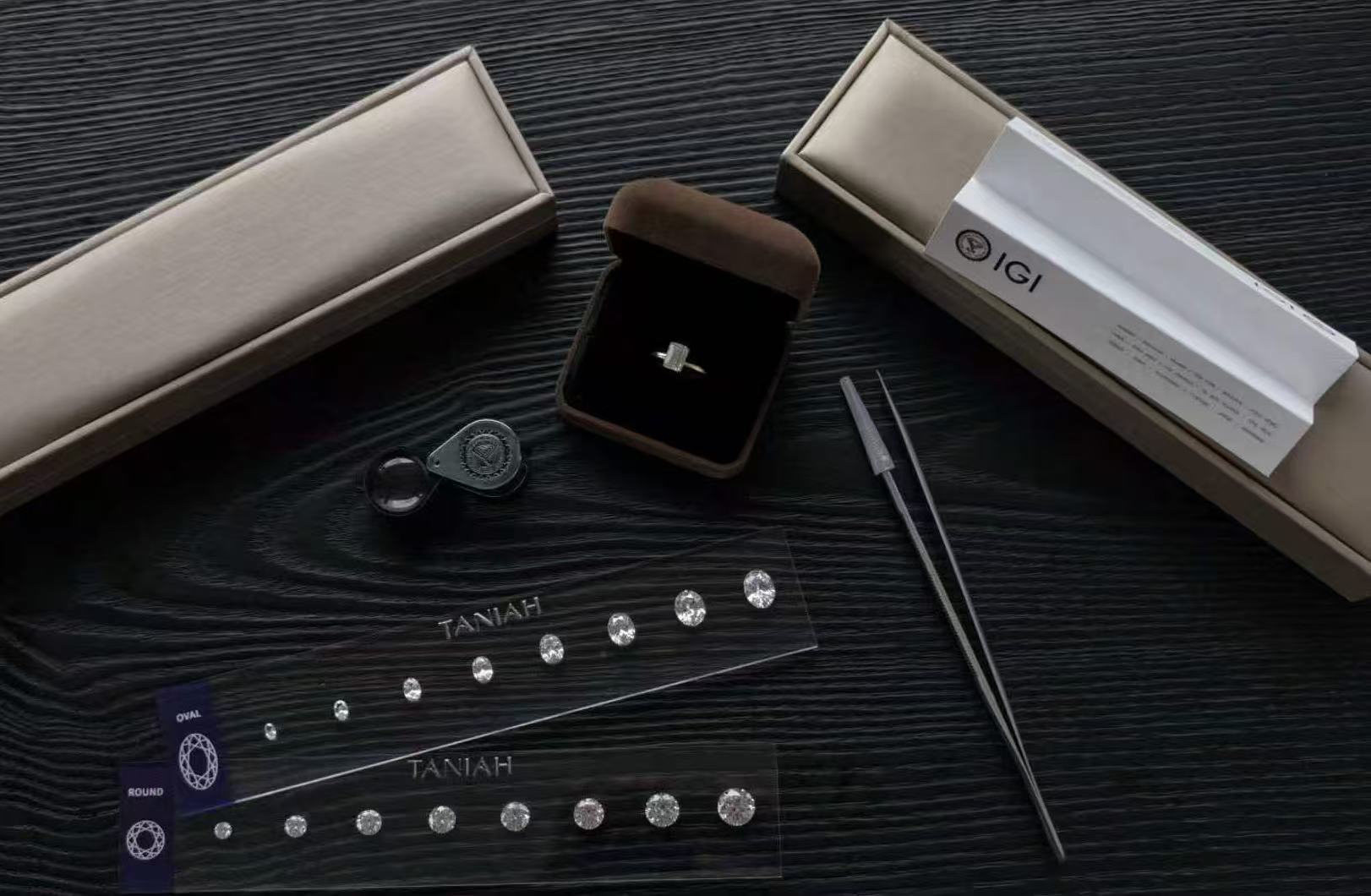
Diamond reports can provide useful information about a diamond, including its characteristics and origin.
IGI, for instance, states whether a diamond is natural or lab-grown and provides grading for lab-grown diamonds and the 4Cs where the jewellery allows.
GIA also identifies lab-grown diamonds and uses a different Laboratory-Grown Diamond Quality Assessment. Its reports also currently state laser inscription that confirms the stone is lab grown.
This matters because grading can differ across labs and reports.
So rather than asking only:
“Does it have a certificate?”
ask:
Which laboratory issued the report, what does the report assess, and does it clearly identify the diamond's origin?
For the next step, consult Taniah Jewellery’s How to Read a Diamond Certificate.
A Note About the 4Cs and Lab-Grown Diamonds
Here's something to consider for today's consumers.
IGI still issues 4Cs reviews for lab-grown diamonds.
GIA's policy has also evolved. Its lab-grown diamond service now uses a Premium or Standard quality evaluation for some colorless to near-colorless lab-grown diamonds, rather than its traditional natural diamond D to Z color and clarity nomenclature.
Therefore, we should avoid saying that every laboratory grades natural and lab-grown diamonds the same way.
The laboratory and the report are important.
What About the Environment?

Here, simplistic statements can easily be incorrect.
Lab-grown diamond production doesn't use the same practices as conventional diamond mining, but it still uses resources.
Natural diamond mining uses resources and can have environmental and social impacts that depend on the mine, its location, and the methods used.
The environmental impact of diamond production depends on how the diamond was produced, the energy source used, and what impacts are being measured.
When it comes to environmental impact, go beyond claims that lab-grown diamonds are "eco-friendly" and ask for more detail on the diamond's production.
And What About Resale Value?
You should buy both types of diamonds with the understanding that they will not increase in value.
Value appreciation is a concern, but with both types of diamonds, it is unlikely.
Resale values can depend on the following factors.
- Diamond quality
- Carat weight
- Shape
- Certification
- Original purchase price
- Market conditions
- Consumer demand
- Natural rarity or lab-grown supply
As production and supply of lab-grown diamonds have increased, prices have fluctuated; consequently, future resale values of lab-grown diamonds will be harder to predict.
The resale values of diamonds are even harder to predict if you consider the fact that buying an engagement ring is usually a one-time purchase. It is better to buy a diamond based on its appearance, quality, and meaning than to treat it as an investment.
Which Diamond Is Right for You?
There is no universal best diamond. The best diamond for you is the one that aligns with your preferences.
A lab-grown diamond may appeal if you prioritize:
- Greater budget flexibility
- A larger diamond for your budget
- Controlled laboratory origin
- The modern story behind its creation
- Avoiding conventional diamond mining
A natural diamond may appeal if you prioritize:
- Natural geological origin
- Rarity and scarcity
- The history of a naturally formed diamond
- Traditional diamond symbolism
- The connection to a stone formed within the Earth
A diamond's origin should not impact the quality of a diamond in any way. Focus on the cut and the certification. Natural and lab-grown diamonds have their own generations of value and beauty.
Before You Choose, Ask These Six Questions
Before you buy based on one headline claim, ask…
1. Is the diamond natural or lab-grown?
2. Which lab issued the report?
3. What does the report say about the diamond’s characteristics?
4. Is the diamond's origin clearly disclosed?
5. How does its price compare to similar options?
6. Does it check all the boxes for you?
That last question is the easiest to overlook.
A diamond can check all the boxes and still not be the right choice if its origin and story fail to align with what you value.
The Choice Is About More Than “Better”
Lab-grown and natural diamonds share many similarities that contribute to a gemstone's value.
The one important distinction is origin.
A natural diamond has a unique geological origin that spans millions of years; a lab-grown diamond has a shorter, more controlled, technological origin.
This origin also speaks to rarity, supply, and price.
So the buying experience doesn't need to be…
Which diamond is better?
A better question is:
Which diamond's origin, quality, price, and story are right for me?
Your Next Step
Want to understand diamond quality?
Check out Taniah Jewellery’s guide to the 4C’s
Want to verify what you're buying?
Know how to read a diamond report by learning everything you need to know about diamond certificates.
Choosing the ring around your diamond?
Design Basics and Engagement Ring Styles & Setting Type explain how diamonds and ring settings work together to help you choose your ring.
Looking after your finished ring?
See Taniah Jewellery's Ring Care Guide for practical advice on cleaning, storage and everyday wear.
Explore Taniah’s Lab-Grown Diamond Collections
At Taniah Jewellery, we believe jewellery should be chosen for the story it will carry, not for the price someone else may one day pay for it.
The true value of a diamond is not determined by its resale potential, but by the memories, milestones, and moments it will represent throughout your life.

Leave a comment