






The 4Cs of Diamonds: Cut, Colour, Clarity & Carat

If you are purchasing a diamond for an engagement ring or another significant piece of jewellery, you will encounter the 4Cs of diamonds: Cut, Colour, Clarity, and Carat Weight.
The four Cs of diamonds give a standardised way to discuss and evaluate diamond quality. However, that understanding doesn't mean you must choose the highest grade for every C; each diamond's specific cut, along with your taste and budget, shapes your choice.
Taniah Jewellery breaks down each of the 4Cs and helps you understand what you need to know when comparing diamonds.
What Are the 4Cs of Diamonds?
The 4Cs are:
- Cut — how a diamond has been fashioned and how it interacts with light
- Colour — the degree of colour present in a diamond
- Clarity — the presence of inclusions and blemishes
- Carat Weight — the weight of the diamond
Understanding the 4Cs doesn’t dictate that you have to pick the absolute best in everything. It’s about finding the right balance for the particular diamond, its shape, and of course your budget.
The Gemological Institute of America (GIA) established the 4C’s as a standardised system of diamond grading. The 4Cs should not be separated. They should be viewed holistically and as a system.
1. Diamond Cut
When it comes to how a diamond will interact with light, Cut plays a huge role.

Cut should not be confused with the diamond’s shape.
The diamond’s shape (e.g. round, emerald, etc.) is the outline of the diamond.
Cut does not rely on the diamond's shape, but on its design.
Cut refers to a diamond's light performance: the balance of proportion and facet arrangement; symmetry and polish; and the overall effect of these elements on the interaction of a diamond with light.
A well-cut diamond can transmit light through the top of the stone, where it disperses and reflects to create the brilliance, sparkle, and light patterns diamonds are famous for. The GIA’s cut grading system for standard round brilliant diamonds analyses brightness, fire, scintillation, weight ratio, durability, symmetry and polish.
Why does diamond cut matter?
Two diamonds with identical carat weight and similar colour and clarity grades may look very different because of their cut.
A diamond's appearance matters most when considering cut.
It is also important to note that GIA’s standard cut grading system is specifically related to standard round brilliant diamonds. Other diamond cuts are evaluated differently and do not receive the same GIA cut grade.
It is also important to note that GIA’s standard cut grading system is specifically related to standard round brilliant diamonds. Other diamond cuts are evaluated differently and do not receive the same GIA cut grade.

2. Diamond Colour
Diamond colour refers to the degree of colour present in a diamond.
For traditional white diamonds, GIA uses a D-to-Z colour scale:
D → E → F → G → H → ... → Z

D represents the highest colour grade on this scale, while lower grades show progressively more noticeable colour.
Colourless and near-colourless diamonds
Diamonds higher in the scale may appear very colourless. Diamonds lower in the scale have more of a warm hue.
Selecting a diamond is more complex than choosing the best colour grade.
The diamond's colour may be influenced by its shape, setting, and metal. For instance, some diamond shapes are more likely to show colour. Warm-toned metals can look different from white metals.
For this reason, many people choose an ‘in-between’ colour that is slightly lower but may still look the way they want, at a lower price.

What about fancy-colour diamonds?
The D-to-Z scale only applies to diamonds that have colours within the traditional range. Non-traditional coloured diamonds, such as yellow, pink, or blue, are considered coloured or fancy-colour diamonds. These diamonds are evaluated using a different methodology.
3. Diamond Clarity
Clarity refers to the presence of internal characteristics, known as inclusions, and external characteristics, known as blemishes.

GIA's clarity scale contains 11 grades, ranging from:
Flawless (FL)
to
Included (I3).
The grades include:
- Flawless (FL)
- Internally Flawless (IF)
- Very, Very Slightly Included (VVS1 and VVS2)
- Very Slightly Included (VS1 and VS2)
- Slightly Included (SI1 and SI2)
- Included (I1, I2 and I3)
Does higher clarity always mean a better diamond?
Not at all.

A higher clarity grade means that a diamond has clarity characteristics that are either less noticeable or fewer in number than other diamonds. However, this does not mean that the diamond will actually appear more beautiful to the naked eye.
Some inclusions are nearly impossible to detect without the use of a microscope or a loupe.
This is why it can be helpful to take into account the diamond’s “eye cleanliness” in addition to the formal clarity grade. An “eye clean” diamond is generally one where inclusions are not visible to the naked eye, though the term is not an officially recognised GIA clarity grade.
The ultimate goal should be to settle on a diamond that is clean and attractive to you, rather than paying for the highest clarity grade.
4. Diamond Carat Weight
A diamond’s weight is expressed in carats.
A carat is equal to 0.2 grams and can be further divided into 100 points.
For example:
- 0.50 carat = 50 points
- 0.75 carat = 75 points
- 1.00 carat = 1 carat
- 1.50 carats = 1.5 carats

Does a higher carat mean a larger-looking diamond?
Not at all.
Two diamonds of the same carat weight can differ significantly in appearance.
Some of the factors that play a role in the final appearance of a diamond are:
- Diamond shape
- Cut
- Proportions
- Depth
- Table size
Shaped diamonds like ovals and marquise diamonds can appear different to round diamonds when setting them face up with the same weight.
In these cases, when comparing the other variables, carat weight cannot be the only variable for assessing size.
How Do the 4Cs Work Together?
The 4Cs are most useful when considered as a combination.
Imagine you are comparing two diamonds.
One has a better clarity grade, but a less appealing cut. The other has slightly worse clarity, but a better visual performance.
In this case, clarity grade alone cannot determine a diamond's value, and the first diamond may not necessarily be the better diamond.
Your priorities might be:
More visible size → place greater emphasis on carat weight and proportions.
Maximum sparkle → pay close attention to cut and overall light performance.
A very colourless appearance → place greater importance on colour.
Higher clarity → prioritise fewer or less noticeable inclusions.
There is no one combination that every diamond buyer has to choose.
Rather, understanding what each C represents is important to help you make an informed decision about your priorities.
Which of the 4Cs Is Most Important?
There is no one most important C for all diamonds.
Cut has a special focus for many diamond buyers since it deals with how a diamond interacts with light. However, the ideal balance will vary with each stone and what matters most to the buyer.
For example, some buyers would prefer to purchase a smaller diamond that is visually more appealing, while others would purchase a larger diamond that has a higher carat weight.
It is also possible to purchase a lower grade of colour and clarity in a diamond, depending on the appearance you desire.
Instead of asking:
“What is the highest grade I can afford?”
A more useful question is:
“What combination gives me the appearance and characteristics I value within my budget?”
That approach can make diamond shopping much more straightforward.
What Else Should You Consider Besides the 4Cs?
The 4Cs provide the foundation for understanding diamond quality, but they are not the only information you may encounter when comparing diamonds.

Diamond Shape
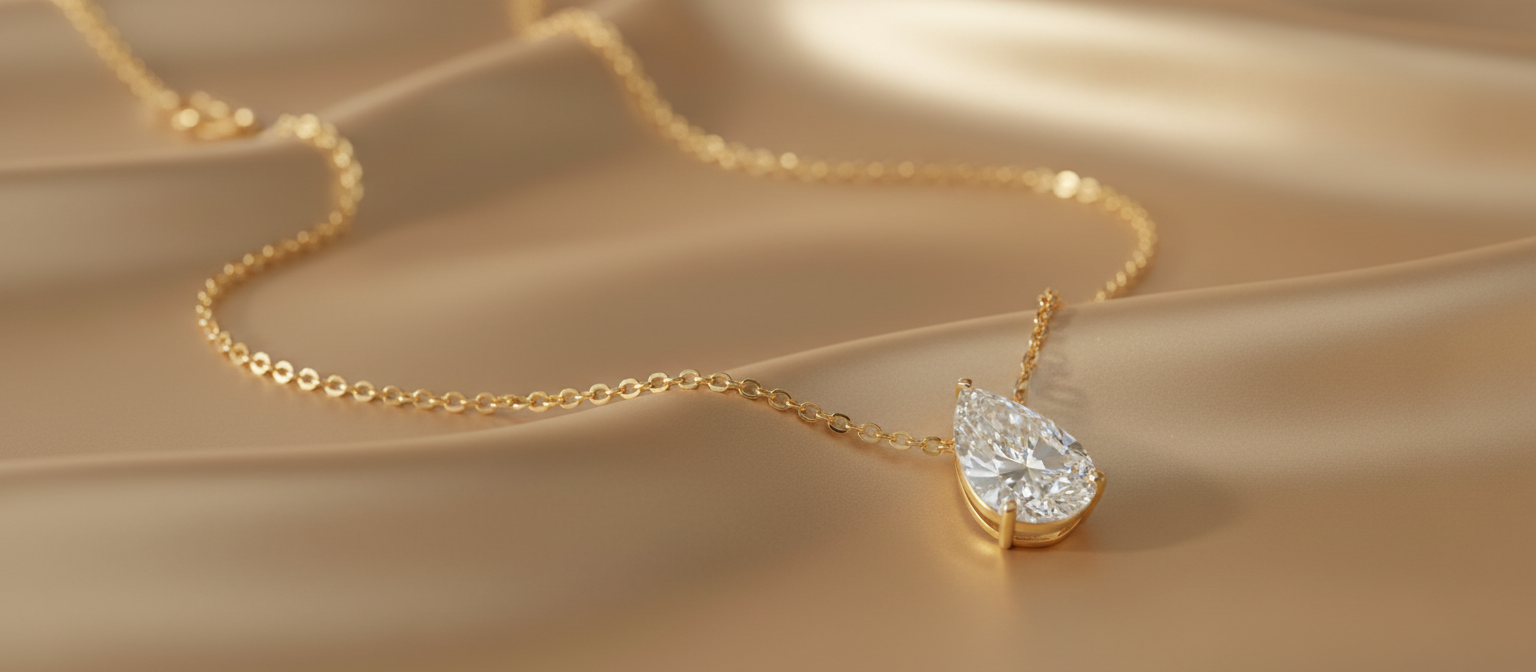
The various shapes, such as round, oval, cushion, emerald, pear, or marquise, offer different characteristics.
Shape, of course, is not part of the 4Cs, but can help dictate the diamond's perceived size, appearance, as well as how color or clarity may appear.
Fluorescence
Fluorescence refers to how a diamond reacts to UV light. This is not one of the 4Cs, but like most of the things we’ve discussed, can be found on a diamond grading report.
Polish and Symmetry
These two terms refer to the finish of a diamond, as well as how aligned the facets are, and can be found in diamond grading reports.
Measurements and Proportions
The measurements of a diamond help determine its size. For round brilliant diamonds, the proportions help determine the way the diamond interacts with light.
Diamond Grading Report
A diamond grading report contains a laboratory’s assessment of the diamond’s characteristics.
When comparing diamonds, one must understand each grading factor rather than simply accepting the grading report’s stated diamond grade.
For more guidance, read Taniah Jewellery's How to Read a Diamond Certificate guide.
How Should You Choose the Right 4Cs?
No need to aim for the best or highest numbers in every category.

Consider three questions as a starting point:
1. What matters most to you visually?
What do you want to have the most of? Are you looking for maximum sparkle, a colourless appearance, a larger diamond, or a mix of several things?
2. What is your budget?
Knowing your budget is important in helping you know where you can compromise or be flexible, and where you can focus.
3. What diamond shape are you considering?
Different diamond shapes interact with the colour, clarity and cut of a diamond in different ways.
Once you know what’s most important to you, you can better compare diamonds.
For example, you might decide that:
Cut is a priority → colour can be slightly flexible → clarity only needs to look clean → carat fits the remaining budget.
There is no generalizable formula. The key is understanding that color, clarity, and carat grade should not be considered on their own.
4Cs of Diamonds: A Simple Comparison
|
C |
What it measures |
Why it matters |
|
Cut |
How a diamond is proportioned and fashioned |
Influences light performance and sparkle |
|
Colour |
Degree of colour in a traditional white diamond |
Influences how colourless the diamond appears |
|
Clarity |
Inclusions and blemishes |
Helps describe the diamond's internal and external characteristics |
|
Carat Weight |
Diamond weight |
Influences weight and, together with proportions, can affect apparent size |
Remember that the Cut impacts the colour and clarity. A diamond should not be assessed in the absence of the other three grades.

Frequently Asked Questions
What are the 4Cs of diamonds?
Of the 4C's, Cut has the greatest influence on how light reflects off a diamond. The right balance depends on the diamond and your preferences while taking budget into consideration.
Which of the 4Cs is most important?
Of the 4C's, Cut has the greatest influence on how light reflects off a diamond. The right balance depends on the diamond and your preferences while taking budget into consideration.
Is diamond cut the same as diamond shape?
No, diamond shape refers to the outline of a diamond, for example round, oval, or emerald. Diamond Cut refers to the cutting of the diamond and how it interacts with light.
What does diamond colour mean?
On white diamonds, the Colour Grade refers to the absence of colour. On the GIA scale, D grade represents the highest grade of Color, and Z grade represents the lowest.
What does diamond clarity mean?
The GIA clarity grading scale extends from Flawless to Included, and refers to inclusions and blemishes.
Does a higher carat mean a larger diamond?
Not necessarily, because the weight of a diamond also depends on the shape of the diamond, which impacts its dimensions.
Do I need the highest grade in every C?
No, it is important to choose the diamond that has the balance that is right for you, based on the other C's.
Where can I find a diamond's 4Cs?
The Diamond Grading Report includes the 4 C's. For a more in-depth interpretation of the report, please refer to Taniah Jewellery's guide titled How to Read a Diamond Certificate.
Understanding the 4Cs with Confidence
The 4Cs can seem complicated when you first start looking at diamonds, but the basic idea is straightforward:
Cut tells you about how the diamond interacts with light.
Colour tells you about the degree of colour present.
Clarity tells you about inclusions and blemishes.
Carat Weight tells you how much the diamond weighs.
It is not essential to have the diamond with the highest grade in all four categories. What matters is having a good understanding of the characteristics and weighing their value against what is important to you.
Once you comprehend the 4Cs, you will be able to compare diamonds easily. Furthermore, instead of selecting the diamond with the highest number, you will be able to make your selection based on your knowledge.
At Taniah Jewellery, we believe one of the most important factors in choosing an item is understanding your diamond.
Continue Your Diamond Journey
How to Read a Diamond Certificate
Learn how to understand the information contained in a diamond grading report and what the different details mean.
Lab-Grown Diamonds vs. Natural Diamonds
There are clear differences you should understand when choosing the diamond origin that is right for you.
Engagement Ring Styles & Setting Type
Understanding diamond shape, ring design, and the many styles of setting will help you in your decision.
Engagement Ring Guide
Return to Taniah Jewellery's Guide for everything you need to choose the perfect engagement ring.
Leave a comment